Davita Watkins

Biography
A native of Memphis, Tennessee, Davita L. Watkins obtained her Bachelor of Science in Chemistry and Anthropology from Vanderbilt University in Nashville, Tennessee. As an undergraduate, she conducted research under the guidance of Dr. David Hercules and later Dr. Grace Zoorob. There, she cultivated an interest in synthetic development and analytical characterization methods. After working briefly as Lead Chemical Analyst for a bioanalytical company, she obtained a PhD in Chemistry from the University of Memphis under the tutelage of Dr. Tomoko Fujiwara. As a doctoral candidate, she developed and established multi-step synthetic methods for a series of stimuli-responsive molecules and polymeric materials, demonstrating potential applications in phase transfer catalysis, catalytic control, and drug delivery. As a postdoctoral researcher at the University of Florida in Gainesville, Florida with Dr. Ronald K. Castellano, she developed novel self-assembling organic materials for photovoltaic applications. In 2014, she began her independent academic career at the University of Mississippi. Her research focuses on establishing design guidelines towards novel functional materials with tunable properties through molecular self-assembly. The well-defined, programmable nanostructured materials produced in her laboratory are designed to be used in various applications, ranging from therapeutics to electronic devices. Within her first year at the university, she received the Oak Ridge Associated Universities (ORAU) Ralph E. Powe Award for her studies of noncovalent interactions in organic semiconducting devices. In the early part of 2017, she earned a National Science Foundation CAREER Award to catalyze the growth and sustainability of her novel research program that exploits sigma-hole interactions to optimize organic electronic materials. She has been named a 2018 Young Investigator by the Polymeric Materials: Science and Engineering (PMSE) Division branch of the American Chemical Society (ACS) and was selected as an Emerging Investigator by the Royal Society of Chemistry Journal of Materials Chemistry C. In 2021, she was named a Trailblazer by Chemical & Engineering News (C&EN) and an International Union of Pure and Applied Chemistry (IUPAC) Young Observer. In 2022, she was named a Rising Star by ACS Women Chemists Committee (WCC) for her contributions to the field and service to the organization. She is currently on the editorial advisory board for ACS Omega and the Journal of Physical Organic Chemistry. Alongside her research efforts, Dr. Watkins has been an active voice for initiatives to increase minorities and women in STEM. She developed and directed a federally funded (National Science Foundation) four-week science initiative for minority women called Operation ICB (I Can Be) to introduce high school scholars to the laboratory setting and encourage them to pursue STEM-related degrees and careers.
Research Overview
Research conducted in the Watkins laboratory addresses challenging problems in materials science and engineering with innovative molecular design and fabrication approaches. The research team focuses on improving the operational efficiency of materials and devices by examining two factors: (1) the nature of the constituting components (i.e., molecules); and (2) the arrangement of those molecules to yield a useful overall composition. Grounded in physical organic chemistry, the principal research focuses on the design and synthesis of novel molecular and macromolecular frameworks that can be assembled via molecular recognition. The team then studies these molecules to understand their organization into discrete nanoscale arrays. Employing a "bottom-up" approach, researchers in the Watkins group develop materials and devices that are constructed from these molecules and relate their properties to overall performance. By exploring the intricate relationships between molecular architecture and material properties, the team has developed constructs that self-assemble into uniform nanostructures with desirable physicochemical and mechanical properties. The knowledge gained from this research leads to more efficient carbon-based materials, thereby advancing the pursuit of technological applications (e.g., electronic devices, nanomaterials, and biomedical implants).
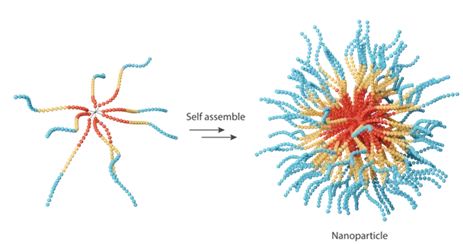
Self-Assembling Hierarchical Macromolecular Frameworks. The Watkins research group has significantly advanced the field of organic and polymer materials through their innovative work on hierarchical macromolecular frameworks. Here, the research focuses on the design and synthesis of functional materials, particularly amphiphilic polymers and dendrimers, with applications in nanomedicine and optoelectronics. By exploring the intricate relationships between molecular architecture and material properties, Watkins and coworkers have developed constructs that self-assemble into uniform nanostructures with functional properties. These materials have shown promise in bioimaging and theranostic applications, with over 30 peer-reviewed articles published in the area. Their strategically designed materials offer advantages over commercial materials, such as improved stability, biocompatibility, and tunable transport properties. Additionally, their work has led to the development of novel organic semiconductors and drug-delivery systems, expanding fundamental understanding of macromolecular chemistry and paving the way for advanced materials with enhanced performance and functionality. (Example Work: DOI: 10.1021/acs.biomac.4c00885)
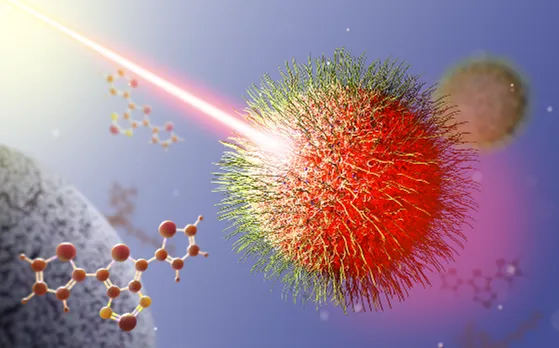
Design Strategies for NIR/SWIR Conjugated Materials. The Watkins research group has made groundbreaking contributions to π-conjugated materials, particularly in the design of near-infrared (NIR)/short-wave-infrared (SWIR) fluorophores, oligomers, and polymers for optoelectronic applications. A defining feature of their work is the strategic application of physical organic principles to engineer highly ordered, two-dimensional molecular architectures, which significantly enhances structural organization and charge transport in π-conjugated systems. The research team engineers donor–acceptor–donor (D–A–D) fluorophores and electropolymers that emit in the NIR-II region (1000–1700 nm), incorporating thienothiadiazole acceptors, a molecular component that is often underexplored. Several of these materials exhibit pH sensitivity and photothermal properties, making them highly promising for theranostic applications, including imaging and targeted therapy. Additionally, several of their seminal papers focus on electrochemical synthesis. Their innovative approach, which has garnered over 500 citations, has introduced a new strategy for designing conjugated materials, advancing the fields of molecular electronics and supramolecular chemistry. (Example Work: DOI: 10.1021/acsami.2c21111)
Publications
For a complete list of publications, click here.
Deeba, F.; Mazeed T. E.; Watkins, D. L.; Rappleye, C. A.; Wood, D. W.; Application of Natively Expressed Chitinase as a Sustainable Fungal Bioshield. Enzyme Microb. Technol. 2025, DOI: 10.1016/j.enzmictec.2025.110727
Green, K.; Kulkarni, A.; Jankoski, P.; Worden, R.; Derbigny, B.; Clemons, T.; Watkins, D. L.; Morgan, S. Influence of Saccharide Structure on the Self-Assembly, Thermal Properties, and Lectin Binding of Amphiphilic Glycopolymer-PLA Block Copolymers. Bioconjugate Chem. 2025, DOI: 10.1021/acs.bioconjchem.5c00217
A. Kulkarni, M. L. Yaddehige, D. J. Cooke, C. M. Hamadani, A. S. Flynt, E. E. L. Tanner, E. L. Que, D. L. Watkins, Multifunctional Fluorinated Copolymer Nanoparticles via a Cationic Dendritic-Based Macromolecular RAFT-CTA. Macromol. Chem. Phys. 2024, DOI: 10.1002/macp.202400354
Green, K. A.; Kulkarni, A.; Jankoski, P. E.; Newton, T. B.; Clemons, T. D.; Watkins, D. L., Morgan, S. E., Biocompatible Glycopolymer-PLA Amphiphilic Hybrid Block Copolymers with Unique Self-Assembly, Uptake, and Degradation Properties. Biomacromolecules, 2024, DOI:10.1021/acs.biomac.4c00885
Mukherjee, S.; Kulkarni, A.; Holbrook, J. H.; Dasanayake, G. S.; Hu, D.; Tanner, E. E. L.; Hummon, A. B.; and Watkins, D. L., Uptake of Self-Assembling Amphiphilic Tryptophan-Based Polymer Nanoparticles in Three-Dimensional Cell Culture Models. ACS Appl. Nano Mater., 2024, DOI: 10.1021/acsanm.4c04589
Sparks, N. E.; Smith C.; Stahl T.; Hamadani, C. M.; Lambert, E.; Hammer, N. I.; Sokolov A. Y. Fitzkee, N. C.; Tanner, E. E. L.; Watkins, D. L., Multifunctional NIR-II Emissive Thienothiadiazole (TTD)-based Fluorophores and Nanoparticles with Dual Imaging and Photothermal Properties. J. Mater. Chem. C 2024, DOI: 10.1039/D3TC04747D.
Sparks, N. E.; Vijayan, S. M.; Roy, J. K.; Dorris, A.; Lambert, E.; Karunathilaka, D.; Hammer, N. I.; Leszczynski, J.; Watkins, D. L., Synthesis and Characterization of Novel Thienothiadiazole-Based D−π–A−π–D Fluorophores as Potential NIR Imaging Agents. ACS Omega 2023, DOI: 10.1021/acsomega.3c02602.
Edgecomb, S. X.; Hamadani, C. M.; Roberts, A.; Taylor, G.; Merrell, A.; Suh, E.; Yaddehige, M. L.; Chandrasiri, I.; Watkins, D. L.; Tanner, E. E. L., Investigation of Physicochemical Drivers Directing Ionic Liquid Assembly on Polymeric Nanoparticles. Electrochem. Sci. Adv. 2023, DOI: 10.1002/elsa.202300013.
Ranathunge, T.A.; Curiac C.; Green, K. A.; Kolodziejczyk, W.; Hill, G.; Morgan, S.; Delcamp, J. H.; and Watkins,D. L. “Heteroacene-Based Polymer with Fast-Switching Visible–Near Infrared Electrochromic Behavior,” ACS Appl. Mater. Interfaces, 2023, DOI: 10.1021/acsami.2c21111